Ovulation Pain on One Side: Is It Normal? Causes, Timing & Red Flags
This content is provided for informational purposes only and does not constitute medical advice. It is not intended to diagnose, treat, cure, or prevent any condition. Always consult a qualified healthcare professional regarding any medical concerns or changes to your health.
Ovulation Pain on One Side: Causes, Timing, and When to Worry
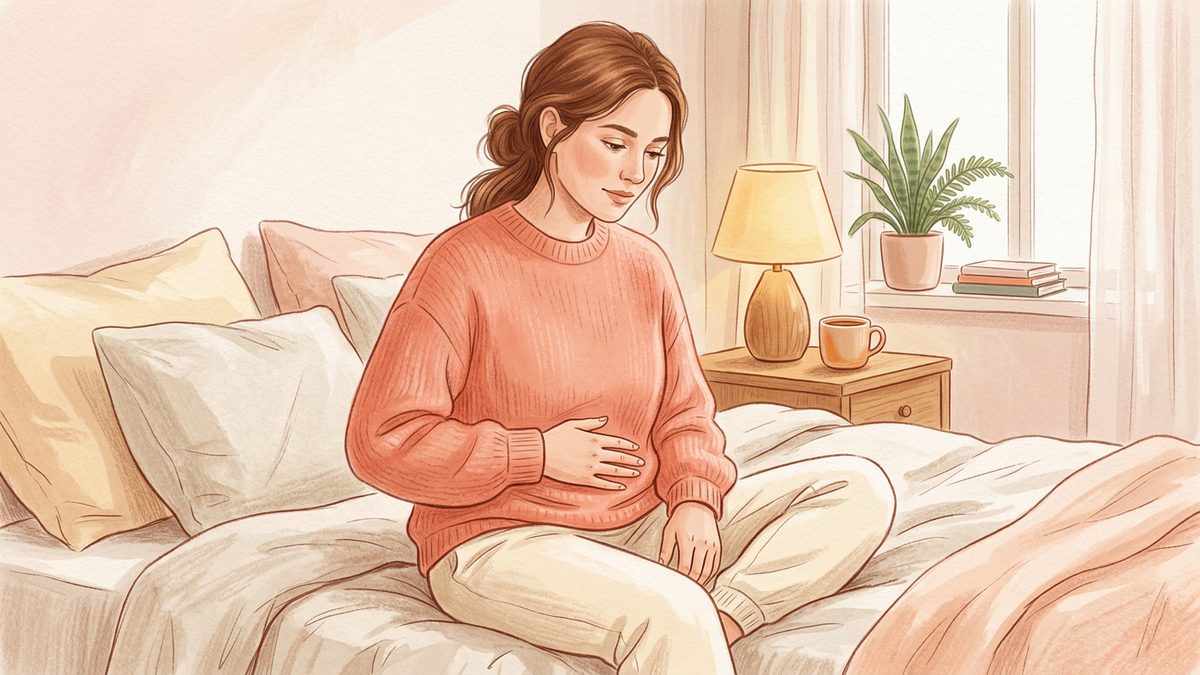
If you’ve ever felt a sudden twinge or cramp on one side of your lower abdomen and thought, "Is this my period starting… or something else?" you’re not alone. Many people notice one-sided pelvic pain around the middle of the cycle, and in a lot of cases it’s related to ovulation.
This guide explains what ovulation pain (also called mittelschmerz) is, why it often shows up on just one side, how long it should last, and how to track it so you can tell what’s normal for your body.
Medical note: This article is for education and isn’t a substitute for professional medical advice. If you have severe or persistent pain, get medical care.
What is ovulation pain (mittelschmerz)?
Ovulation pain is pelvic pain that can happen during ovulation, when your ovary releases an egg. The medical term is mittelschmerz, from German words meaning "middle" and "pain" (Cleveland Clinic).
The pain can feel like a mild twinge or sudden sharp pain, and it usually hurts on just one side of your lower abdomen (the side that releases the egg) (Cleveland Clinic).
If you’re new to cycle tracking, it helps to zoom out and understand how ovulation fits into your whole month—start with the 4 phases of the menstrual cycle.
Why is ovulation pain on one side?
One-sided ovulation pain is common because you have two ovaries, and typically only one ovary releases an egg in a given cycle. When the right ovary ovulates, the discomfort is more likely on the right; when the left ovary ovulates, it’s more likely on the left.
You may notice the side switching from month to month—or staying on the same side for several cycles. Both patterns can happen.
What actually causes the pain?
There isn’t one single cause, but common explanations include:
- Follicle growth and rupture: The follicle (fluid-filled sac) stretches the ovary as it grows and then releases the egg.
- Fluid or small amounts of blood: After ovulation, fluid can irritate the lining of your abdomen, creating a sharp or achy feeling.
- Normal pelvic sensitivity: Some bodies are simply more sensitive to hormonal shifts and ovulatory changes.
If you also experience painful periods, compare sensations with science-backed relief options for cramps so you can describe symptoms more clearly.
When does ovulation pain happen (timing)?
Ovulation usually happens about halfway between your periods—around day 14 of a 28-day cycle—so ovulation pain tends to show up about two weeks before your next period (Cleveland Clinic).
But many cycles aren’t 28 days. That’s why the most useful approach is to track your pattern over 2–3 cycles instead of relying on a calendar-only estimate. A simple starting point is this beginner’s guide to tracking your menstrual cycle.
Common clues ovulation is near
Along with one-sided pain, some people notice:
- Stretchy, clear discharge that looks a bit like egg whites (Cleveland Clinic)
- Light spotting (Cleveland Clinic)
- A small bump in libido or energy
If your cycles are irregular, mid-cycle timing can feel impossible to predict. In that case, the workflow in irregular periods: causes and what to do plus tracking ovulation with irregular periods can help you build a clearer picture.
How long does ovulation pain last?
Ovulation pain typically lasts a few hours, but it can last up to 48 hours (Cleveland Clinic). Some people feel it for just a few minutes, while others feel it for most of the day (Cleveland Clinic).
As a general rule: if you’re feeling one-sided pain that lasts well beyond a couple of days, is getting worse, or keeps recurring in a way that disrupts your life, it’s worth getting evaluated.
Ovulation pain vs. other types of pelvic pain
One-sided pelvic pain can be ovulation—but it’s not the only possibility. Here’s how to think about the pattern.
Ovulation pain (mittelschmerz) tends to be
- Mid-cycle (often about 2 weeks before a period)
- One-sided
- Short-lived (minutes to 1–2 days)
- Sometimes paired with egg-white discharge or light spotting
Period cramps tend to be
- In the days right before or during bleeding
- More central (lower belly, low back)
- Crampy waves, often with fatigue
If you’re unsure which you’re dealing with, tracking the timing alongside symptoms can help you separate them. Your Rhythm makes this easy by keeping your cycle dates, symptoms, and notes in one place—so you can look back and see if the pain reliably appears mid-cycle.
Other causes that can mimic ovulation pain
Consider checking in with a clinician if your pain is new or unusual, because similar symptoms can happen with:
- Ovarian cysts
- Endometriosis
- Pelvic inflammatory disease
- Digestive issues (like constipation or gas)
- Urinary tract issues
The goal isn’t to self-diagnose—it’s to recognize when the pattern doesn’t look like typical mittelschmerz.
How to track ovulation pain on one side (so it’s actually useful)
The key is consistency. Track the same details every time so you can spot patterns.
What to log each time
- Date and time (morning vs. evening can matter)
- Side (left, right, or center)
- Pain type (twinge, sharp, dull ache, cramps)
- Intensity (0–10)
- Duration (minutes, hours, days)
- Associated symptoms (discharge, spotting, nausea, bloating)
- What helped (rest, heat, ibuprofen, hydration)
In Your Rhythm, you can add these as quick symptom entries and notes. After a few cycles, you’ll often see a clear "mid-cycle pain window"—which can be helpful for planning workouts, travel, or even trying to conceive.
If fertility is part of your goal, pair pain-tracking with a broader approach like period tracking for fertility.
A quick “is this ovulation?” checklist
Ask yourself:
- Is it happening around the middle of my cycle (or about 12–16 days before my period usually starts)?
- Is it mostly on one side?
- Does it fade within 48 hours?
- Do I also notice fertile-type discharge?
If you answered yes to most of these, ovulation pain is a reasonable possibility.
What helps ovulation pain?
For many people, ovulation pain is mild and doesn’t require treatment. When you do want relief, these options are commonly used:
- Heat: A heating pad on the lower abdomen can relax muscles and ease discomfort.
- Rest and gentle movement: Light walking or stretching can help if you feel "tight" or crampy.
- Over-the-counter pain relief: Some people use NSAIDs (like ibuprofen) if they can take them safely.
- Hydration and regular meals: Blood sugar dips and dehydration can make pain feel worse.
If exercise is part of your routine, you may like how to adapt workouts around your period and then use your own mid-cycle pain data to adjust intensity on ovulation days too.
Nutrition can also support steadier energy through the month—see foods to eat during each cycle phase.
When to worry: signs you should get checked
Ovulation pain is typically harmless, but there are situations where you should contact a healthcare provider. Cleveland Clinic recommends calling your provider if you missed your last period or have symptoms during ovulation such as fever over 100.4°F, pain while urinating, severe nausea/vomiting, heavy bleeding between periods, or severe mid-cycle pain that lasts longer than a day or occurs during most months (Cleveland Clinic).
Also seek care if:
- The pain is sudden and severe
- You feel faint, dizzy, or short of breath
- You suspect pregnancy (especially if pain is one-sided and intense)
If mood changes and irritability cluster around the late-luteal phase instead, you may be dealing with PMS/PMDD patterns rather than ovulation. Compare your symptom timing with PMS vs. PMDD: understanding the difference and how your cycle affects mood and energy.
Frequently asked questions
Can ovulation pain happen every month?
Yes. Some people feel it in many cycles, while others only notice it occasionally. Tracking helps you see whether it’s becoming more frequent or more intense over time.
Does ovulation pain mean I’m definitely ovulating?
Not always. It can be a clue, but it’s not a guarantee. If you need high confidence (for fertility goals), combine pain tracking with other signs (like cervical mucus changes) and consider discussing options with a clinician.
Why is it worse on some months?
Stress, sleep, hydration, digestive changes, and overall inflammation can all change how pain feels. That’s why logging context—sleep, workouts, and mood—can be surprisingly helpful.
If you’re working on cycle-aware planning, cycle syncing for productivity at work can give you a practical framework.
CTA: make mid-cycle pain make sense
One-sided ovulation pain is often normal—but it shouldn’t be a mystery. Track the day, the side, and the pattern for a few cycles, and you’ll usually learn what’s typical for you and what deserves a check-in.
If you want an easy way to log symptoms and spot patterns, try Your Rhythm to track ovulation pain, discharge, mood, workouts, and more—so you can walk into appointments (or plan your month) with real data.
Prova Your Rhythm gratis
Monitora il tuo ciclo, registra il tuo umore e ottieni insight personalizzati. Disponibile su iOS e Android.
Articoli correlati
12 Perimenopause Symptoms You Shouldn’t Ignore (Plus Relief Tips for 2026)
Hot flashes aren’t the only sign. Here are 12 common perimenopause symptoms, why they happen, what you can do today, and when it’s time to talk to a clinician.
Leggi l'articolo12 Ovulation Symptoms: The Most Common Signs You’re Fertile in 2026
Wondering if you’re ovulating? Learn the 12 most common ovulation symptoms, what’s normal vs. a red flag, and how to confirm your fertile window with simple at-home steps.
Leggi l'articolo