Exercise and Your Period: How to Adapt Your Workouts
This content is provided for informational purposes only and does not constitute medical advice. It is not intended to diagnose, treat, cure, or prevent any condition. Always consult a qualified healthcare professional regarding any medical concerns or changes to your health.
Exercise and Your Period: How to Adapt Your Workouts
For decades, the fitness world operated on a one-size-fits-all model: the same training plan, the same intensity, every week of the month. But research increasingly shows that the hormonal shifts of your menstrual cycle significantly influence your energy availability, muscle synthesis, injury risk, and recovery capacity. Adapting your workouts to your cycle — a practice known as cycle syncing — can help you train smarter, recover better, and feel genuinely good about exercise throughout the month. Understanding the four phases of your cycle is the foundation for doing this effectively.
The good news is that you don't have to stop exercising during your period. Quite the opposite — regular physical activity throughout all four phases of your cycle has been shown to reduce cramp severity, ease PMS symptoms, improve mood, and support long-term reproductive health.
Why Does Your Cycle Affect Your Workouts?
Estrogen and progesterone don't just influence mood and fertility — they play an active role in your physical capacity. Research shows that:
- High estrogen (during the follicular and ovulatory phases) has a mild anabolic (muscle-building) effect, improves coordination, and may increase the body's ability to burn fat for fuel — potentially delaying fatigue
- High progesterone (during the luteal phase) increases body temperature, elevates resting heart rate, and raises the perceived exertion of a given workout, making the same session feel harder
- Iron loss during menstruation can contribute to fatigue, particularly in those with heavy periods
Understanding these physiological shifts allows you to schedule demanding training when your body is best equipped for it — and to respect your body's need for recovery when it isn't.
Phase-by-Phase Workout Guide
Menstrual Phase (Days 1–5): Listen and Move Gently
You don't need to skip exercise during your period — but you may want to scale back. Low energy, cramping, and iron loss can make high-intensity training feel significantly harder than usual. Research from the Harvard T.H. Chan School of Public Health confirms that exercise minutes tend to decrease on bleeding days, which reflects the body's natural signalling.
The key is to listen to your body rather than following a rigid plan. Many people find that gentle movement actually reduces cramp severity by boosting endorphins and improving pelvic blood flow.
Best for this phase:
- Walking (even 20 minutes is beneficial)
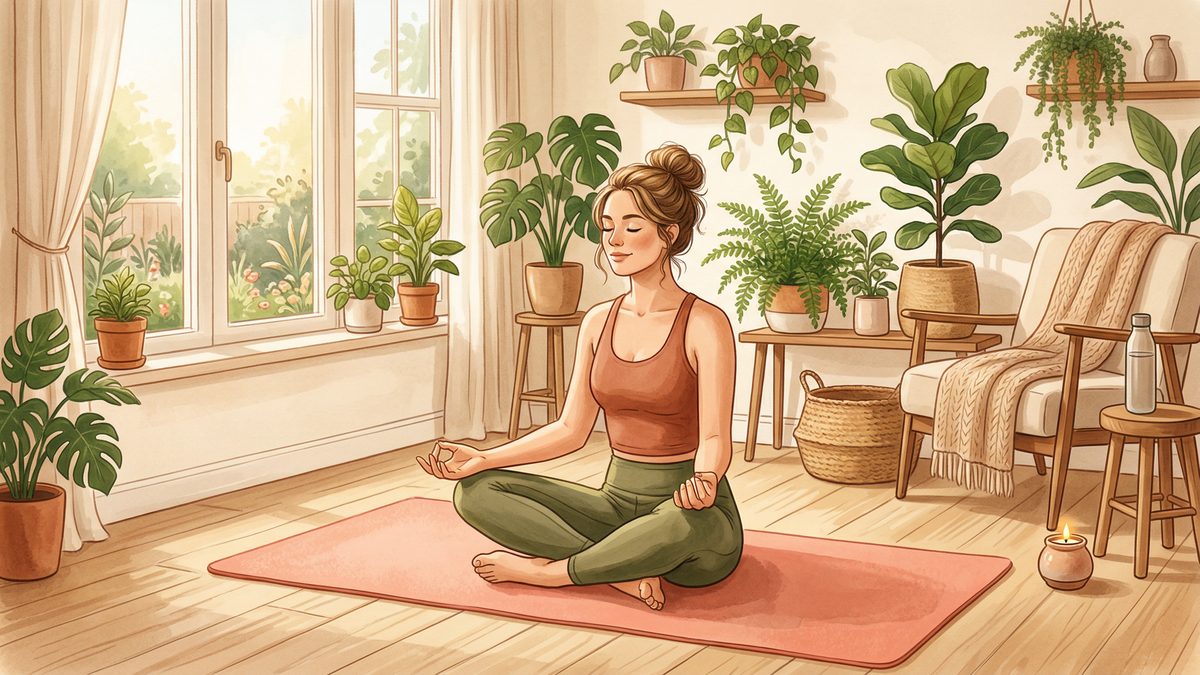
- Gentle yoga, particularly yin or restorative styles
- Light stretching and mobility work
- Low-intensity cycling or swimming
- Poses like child's pose, supine twist, cat-cow, and forward folds to release pelvic tension
Scale back or skip:
- High-intensity interval training (HIIT)
- Heavy strength training
- Long endurance sessions
As energy returns in Days 3–5, you can gradually reintroduce moderate strength work or light cardio if you feel ready.
Follicular Phase (Days 6–13): Build Strength and Intensity
The follicular phase is your hormonal rising tide. Estrogen climbs, energy improves, mood lifts, and your body becomes increasingly receptive to training stress. This is the phase where your fitness gains are easiest to make.
High estrogen appears to support glycogen preservation (meaning your muscles can work harder for longer) and may reduce post-workout muscle soreness. Your coordination and motivation are also typically higher during this phase.
Best for this phase:
- Progressive strength training (increase weights, sets, or reps)
- High-intensity interval training (HIIT)
- Interval runs or cycling
- Skill-based training and learning new movements
- Longer endurance sessions
Key tip: This is the best time to try for personal bests, attempt new skills, or increase your training volume. Your body is primed to respond.
Be aware: some research suggests increased ligament laxity during the follicular phase, which may modestly increase ACL injury risk, particularly in high-pivot sports. Adequate warm-up and focus on landing mechanics is advisable.
Ovulatory Phase (Days 13–16): Peak Performance
Ovulation represents your hormonal and physical peak. Estrogen is at its highest, testosterone spikes briefly (boosting strength and confidence), and coordination is at its best. This is typically when people feel the most physically capable and motivated.
Research published by Orlando Health notes this as the ideal window for your most demanding training sessions — maximum effort, personal records, and competitive events.
Best for this phase:
- Maximum effort strength sessions — aim for personal bests
- HIIT and sprint training
- Competitive sports and athletic events
- Explosive movements (jumps, throws, sprints)
Key tip: Schedule your most ambitious workouts, races, or fitness tests during your ovulatory phase for optimal performance potential.
Luteal Phase (Days 15–28): Moderate and Recover
After ovulation, progesterone rises and the hormonal environment shifts. The luteal phase is associated with higher perceived exertion, elevated resting heart rate and body temperature, slower recovery, and (later in the phase) potential fatigue and PMS symptoms.
This doesn't mean stopping training — but it does mean adjusting intensity and expectations. Fighting the luteal phase with relentless high-intensity training can increase burnout and make PMS symptoms worse. Working with it — reducing intensity, increasing recovery, and focusing on technique — maintains fitness while respecting what your body needs.
Early luteal phase (Days 15–21): You may still have reasonable energy. Moderate-intensity cardio, stability work, and moderate strength training are all appropriate.
Late luteal phase (Days 22–28): As PMS potentially kicks in, dial back further. Focus on:
- Moderate-intensity cardio (walking, cycling, swimming — not breathless intervals)
- Lighter resistance training with higher reps
- Yoga and Pilates
- Mobility and flexibility work
- Prioritising sleep and recovery over performance — luteal phase sleep disruption is common, and protecting rest time supports both hormonal health and training adaptation.
Key tip: Houston Methodist research suggests increasing carbohydrate intake before luteal-phase workouts and raising daily protein by approximately 12% to offset reduced muscle synthesis during this phase. Our guide to cycle-phase nutrition has specific food recommendations for each phase to support this.
What About Exercising When You Have Cramps?
For most people, gentle exercise during cramps is beneficial — endorphins act as natural analgesics, and improved pelvic circulation can ease uterine contractions. Exercise is also one of the best tools for managing the mood and energy shifts across your cycle. However, this is highly individual. Some people find that exercise aggravates severe cramping.
If you have cramps:
- Start with gentle yoga or a short walk
- Avoid high-impact exercise if it worsens pain
- Apply heat before or after exercise to relax uterine muscle
- Don't push through severe pain — if cramps are debilitating, rest is appropriate
Tracking Your Workouts Alongside Your Cycle
The single most useful thing you can do to personalise this approach is to track both your cycle phases and your exercise sessions together. Your Rhythm (available on iOS and Android) allows you to log your workouts, energy levels, and physical symptoms alongside your cycle data. Modern cycle tracking apps have made this kind of integrated data analysis accessible to everyone. — so over time you can see exactly when your body performs best, recovers fastest, and needs more rest.
This data takes the guesswork out of training periodisation and helps you build a fitness routine that works with your biology rather than against it. For a broader view on working with your hormonal rhythm, see our guide to cycle syncing your productivity. The result: better performance when it counts, less burnout, fewer injuries, and a healthier relationship with exercise year-round. Start cycle syncing your training today with Your Rhythm.
Your cycle is not a limitation on your fitness — it's a guide to your body's changing needs. Use it.
Related Reading
- The Best Foods to Eat During Each Phase of Your Cycle
- Understanding the 4 Phases of Your Menstrual Cycle
- Period Cramps: 10 Science-Backed Ways to Find Relief
Try Your Rhythm Free
Track your cycle, log your mood, and get personalized insights. Available on iOS and Android.
Related Articles
12 Perimenopause Symptoms You Shouldn’t Ignore (Plus Relief Tips for 2026)
Hot flashes aren’t the only sign. Here are 12 common perimenopause symptoms, why they happen, what you can do today, and when it’s time to talk to a clinician.
Read article12 Ovulation Symptoms: The Most Common Signs You’re Fertile in 2026
Wondering if you’re ovulating? Learn the 12 most common ovulation symptoms, what’s normal vs. a red flag, and how to confirm your fertile window with simple at-home steps.
Read article