Die 4 Phasen deines Menstruationszyklus erklärt
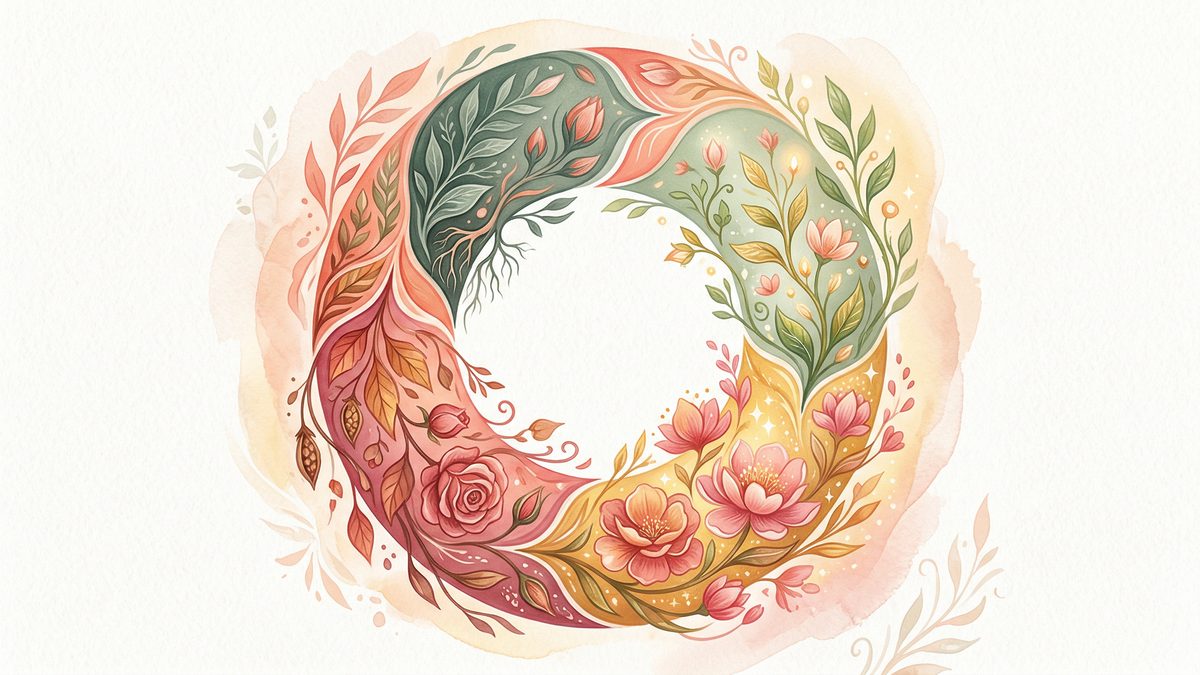
When most people think about their menstrual cycle, they think about their period. But your period is just one of four distinct phases that make up a complete menstrual cycle. Each phase is governed by shifting hormones that influence how you feel physically, mentally, and emotionally. Understanding this monthly pattern is the first step to living in greater harmony with your body.
A typical cycle lasts between 21 and 35 days, with 28 days often cited as the average. The cycle is orchestrated by four key hormones: estrogen, progesterone, follicle-stimulating hormone (FSH), and luteinizing hormone (LH).
Phase 1: The Menstrual Phase (Days 1–5)
Your cycle officially begins on Day 1 — the first day of your period. The menstrual phase occurs because the egg from your previous cycle wasn't fertilised, causing estrogen and progesterone levels to fall sharply. This hormonal drop signals your uterus to shed its lining, which exits your body as menstrual flow.
What's happening hormonally
Estrogen and progesterone are at their lowest during this phase. The pituitary gland begins releasing FSH to stimulate new follicle growth in the ovaries, setting the stage for the next cycle.
How you may feel
Physical symptoms during menstruation can include cramps, lower back pain, bloating, breast tenderness, and fatigue. Mood-wise, some people feel relief as the hormonal tension of the luteal phase eases, while others experience low mood or irritability due to prostaglandins (the chemicals that trigger uterine contractions).
Tips for this phase
- Prioritise rest and warmth
- Eat iron-rich foods to replace blood loss (leafy greens, lean red meat, lentils)
- Gentle movement like walking or yoga can help ease cramping
- Stay hydrated and reduce inflammatory foods like alcohol and excess sugar
Phase 2: The Follicular Phase (Days 1–13)
The follicular phase overlaps with menstruation and continues until ovulation. It's named for the follicles — fluid-filled sacs in the ovaries — that are stimulated by FSH to grow and develop. One follicle becomes dominant and matures into the egg that will be released at ovulation.
What's happening hormonally
As the dominant follicle matures, it releases increasing amounts of estrogen. This rising estrogen thickens the uterine lining (endometrium) in preparation for a potential fertilised egg. By the end of the follicular phase, estrogen peaks and triggers an LH surge.
How you may feel
The follicular phase is often described as the most energising time of the cycle. Rising estrogen is linked to increased serotonin production, which can lift mood, sharpen focus, and boost confidence. Many people feel more social, motivated, and physically capable during this phase.
Tips for this phase
- Lean into higher-intensity workouts — your body is primed for performance
- This is a great time to take on new projects or challenge yourself creatively
- Eat lean proteins and complex carbohydrates to fuel your energy
- Cruciferous vegetables like broccoli and cauliflower support healthy estrogen metabolism
Phase 3: The Ovulatory Phase (Days 13–16)
Ovulation is the central event of the menstrual cycle — and often the shortest phase, lasting just 1 to 2 days. A sudden surge in LH triggers the dominant follicle to release a mature egg from the ovary. The egg travels into the fallopian tube, where it can be fertilised by sperm for up to 24 hours.
What's happening hormonally
Estrogen peaks just before ovulation, and LH spikes sharply to trigger egg release. Testosterone also rises briefly, which can increase energy and libido. After the egg is released, the remnant follicle transforms into the corpus luteum, which will produce progesterone in the next phase.
How you may feel
Ovulation is often when people feel their most vibrant. Energy levels are high, communication tends to feel easier, and libido is at its peak. Some people notice a brief, one-sided twinge in the lower abdomen (called mittelschmerz) when the egg is released, as well as a change in cervical mucus — it becomes clear, slippery, and stretchy, similar to raw egg white.
Tips for this phase
- Peak performance training — a great time for PRs and high-intensity workouts
- If trying to conceive, this is your fertile window (the 5 days before ovulation plus the day of)
- Stay hydrated to support cervical mucus quality
- Antioxidant-rich foods like berries and leafy greens support egg health
Phase 4: The Luteal Phase (Days 15–28)
The luteal phase begins after ovulation and lasts until the start of your next period — typically around 14 days. This is the phase associated with PMS symptoms and the one most people find most challenging.
What's happening hormonally
The corpus luteum secretes progesterone, which prepares the uterine lining for implantation of a fertilised egg. Estrogen also rises again, though less dramatically than in the follicular phase. If the egg isn't fertilised, the corpus luteum breaks down, progesterone and estrogen drop, and menstruation begins — restarting the cycle.
How you may feel
Progesterone has a calming but sometimes sedating effect. Early in the luteal phase, many people feel relatively well. But as progesterone and estrogen fall in the final week, PMS symptoms often emerge: irritability, anxiety, bloating, breast tenderness, food cravings, sleep disruption, and low mood. The severity of these symptoms varies greatly between individuals.
Tips for this phase
- Scale back workout intensity — your body is under higher hormonal load
- Magnesium-rich foods (dark chocolate, pumpkin seeds, avocado) can reduce bloating and ease cramps
- Complex carbohydrates help manage cravings and stabilise blood sugar
- Prioritise sleep, as progesterone can affect sleep quality
Why Tracking All Four Phases Matters
Most people only pay attention to their cycle during their period — but the other three phases are equally important for understanding your health and wellbeing. An app like Your Rhythm makes it easy to log symptoms, mood, and energy across all four phases, building a personalised picture of your unique hormonal patterns over time. With Your Rhythm available on iOS and Android, you can start building your cycle profile in minutes.
Armed with this knowledge, you can adapt how you exercise, eat, work, and socialise in sync with your cycle — an approach increasingly known as cycle syncing. Rather than pushing through energy dips or being surprised by emotional shifts, you can anticipate them and plan accordingly.
Your cycle isn't just a monthly inconvenience — it's a source of insight into your whole-body health. The more you understand it, the better equipped you are to take care of yourself.
Your Rhythm kostenlos ausprobieren
Verfolge deinen Zyklus, notiere deine Stimmung und erhalte personalisierte Einblicke. Verfügbar für iOS und Android.
Ähnliche Artikel
12 Perimenopause Symptoms You Shouldn’t Ignore (Plus Relief Tips for 2026)
Hot flashes aren’t the only sign. Here are 12 common perimenopause symptoms, why they happen, what you can do today, and when it’s time to talk to a clinician.
Artikel lesen12 Ovulation Symptoms: The Most Common Signs You’re Fertile in 2026
Wondering if you’re ovulating? Learn the 12 most common ovulation symptoms, what’s normal vs. a red flag, and how to confirm your fertile window with simple at-home steps.
Artikel lesen