Digitale Gesundheit: Warum jede Frau 2026 ihren Zyklus verfolgen sollte
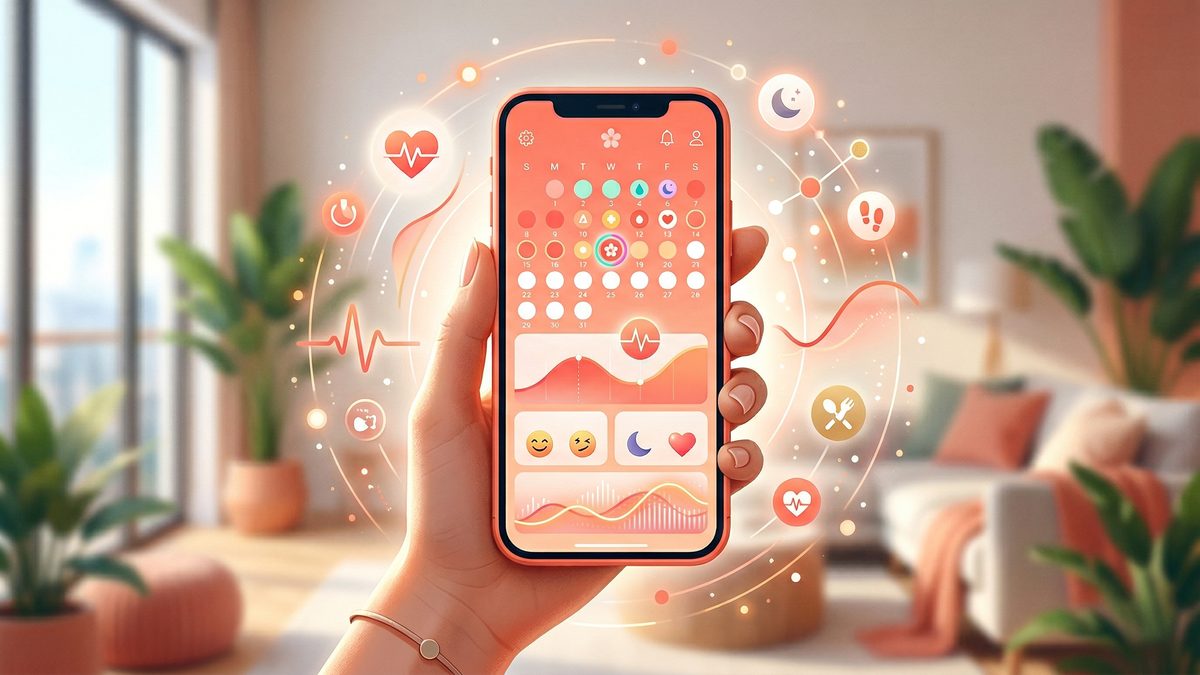
The idea of recording your period dates in a paper diary feels like a relic of another era. In 2026, cycle tracking has become one of the most sophisticated and clinically valuable applications in the digital health space — combining AI-powered predictions, multi-symptom logging, and research-grade data capture into a tool that fits in your pocket.
Yet despite the technology being more accessible and powerful than ever, many people still don't track their cycles, or track only inconsistently. If that sounds like you, this article is for you.
The Menstrual Health Tech Boom
The numbers are striking: the global menstrual health apps market was valued at US$2.07 billion in 2025 and is forecast to reach US$13.11 billion by 2035, growing at a compound annual rate of over 20%, according to a February 2026 analysis published by FemTech World. This growth is being driven by rising reproductive health awareness, widespread smartphone adoption, and a fundamental shift in how people engage with their own health data.
This isn't niche technology anymore. Over 280 million people have downloaded Flo alone. Clue has collaborated with research institutions to improve prediction models. Wearable devices like Apple Watch now integrate menstrual cycle tracking directly into their health platforms. Period tracking has moved from the margins of wellness into the mainstream of preventive digital health.
And the science is keeping pace with the technology.
Cycle Tracking as a Clinical Tool
The Harvard T.H. Chan School of Public Health's Apple Women's Health Study — one of the largest longitudinal studies of menstrual health in history — has produced a growing body of evidence demonstrating that consistent cycle tracking is genuinely clinically valuable. Researchers have found that tracking the menstrual cycle as a vital sign can contribute to earlier detection of gynaecologic and other health conditions.
The U.S. American College of Obstetricians and Gynecologists (ACOG) and the American Academy of Pediatrics both support treating the menstrual cycle as a vital sign — a measurable indicator of overall health status, not merely a reproductive function.
When something changes in your cycle — a shift in length, intensity, symptom pattern, or timing — that change is data. Digital tracking transforms it from a vague memory ("I think my periods have been heavier recently?") into a documented pattern you can share with your doctor.
What Modern Cycle Tracking Apps Actually Do
Today's best cycle tracking apps are a far cry from simple period calendars. Here's what leading platforms now offer:
AI-Backed Cycle Predictions
Machine learning algorithms analyse months or years of your cycle data — including length variations, symptom patterns, and logged biomarkers — to generate personalised predictions for your next period, ovulation window, and likely symptom days. The more data you log, the more accurate these predictions become.
Your Rhythm uses AI-backed analysis to generate insights that improve over time, learning the nuances of your personal cycle rather than applying generic population-level averages.
Multi-Symptom Logging
Modern apps can track far more than bleeding dates. Leading platforms allow you to log:
- Period flow and duration
- Mood and emotional state
- Energy levels
- Sleep quality
- Physical symptoms (cramps, bloating, headaches, breast tenderness, acne)
- Cervical mucus observations
- Basal body temperature
- Sexual activity and libido
- Diet and exercise
- Medication and supplements
The value of this multi-dimensional logging is the ability to identify correlations — to see, for example, that your energy crashes reliably 3 days before your period, or that magnesium supplementation correlates with reduced cramping, or that poor sleep clusters in a specific cycle phase.
Fertility Window Prediction
For those trying to conceive (or practising fertility awareness for contraception), apps that incorporate BBT, cervical mucus observations, and OPK results alongside cycle history can generate fertility window predictions with clinically meaningful accuracy — significantly better than calendar-only calculations.
Condition Monitoring
For people managing conditions like PCOS, endometriosis, or PMDD, cycle tracking apps serve as a symptom diary that supports monitoring, medical appointments, and treatment evaluation. The daily symptom log is exactly what clinicians need for prospective PMDD diagnosis, for example — and having it in an app makes it far more likely to actually be kept.
Integration with Wearables and Health Platforms
Many leading cycle apps now integrate with Apple Health, Google Fit, Fitbit, and Garmin, allowing physiological data from wearables (heart rate variability, skin temperature, sleep stages) to be combined with cycle data for richer insights.
Data Privacy: What to Know
Given the sensitivity of reproductive health data — particularly in a global landscape where reproductive rights and healthcare access vary significantly — data privacy is a legitimate concern in choosing a cycle tracking app. Key considerations:
- Where is your data stored? EU-based apps are subject to GDPR, which provides strong privacy protections and restricts data sale.
- Does the app sell data? Review the privacy policy carefully, not just the marketing language.
- Can you export or delete your data? A trustworthy app gives you full control.
- Is local storage available? Some apps (like Embody) store data entirely on-device, never sending it to servers.
Reputable apps are transparent about their data practices and offer meaningful privacy controls. Always read the privacy policy before logging sensitive health information.
Why 2026 Is the Best Time to Start
Several factors converge to make right now an excellent moment to begin or recommit to cycle tracking:
1. The technology is genuinely good. AI-powered prediction, seamless UX, and integration with wearables mean the experience of tracking has become easy and genuinely insightful rather than effortful.
2. Reproductive health awareness has never been higher. Cultural conversations about period health, PMDD, endometriosis, PCOS, and fertility are more widespread and mainstream than at any previous point, reducing stigma and increasing the perceived value of tracking.
3. Preventive health is the future. Healthcare systems globally are shifting toward proactive, data-driven preventive care. Personal health data — including menstrual cycle data — is increasingly valued in clinical settings.
4. The research base keeps growing. Studies continue to demonstrate the diagnostic and health monitoring value of consistent cycle tracking, strengthening the clinical case for the practice.
Getting Started with Your Rhythm
You don't need to overhaul your health routine to start benefiting from cycle tracking. Download Your Rhythm on iOS or Android and begin with just three data points: your period start date, how you're feeling today, and your energy level. That's it.
The app will begin building your personal cycle picture immediately, and your investment of 30 seconds a day will compound into months of actionable insights — including personalised predictions, symptom pattern identification, and AI-backed recommendations tailored to your unique cycle.
In 2026, understanding your cycle isn't just a wellness trend — it's a genuine health strategy. Your body generates monthly data that, when captured and analysed, can improve your quality of life, inform your healthcare, and deepen your self-knowledge in ways that genuinely matter.
The tools to do that have never been better. There's no better time to start.
Your Rhythm kostenlos ausprobieren
Verfolge deinen Zyklus, notiere deine Stimmung und erhalte personalisierte Einblicke. Verfügbar für iOS und Android.
Ähnliche Artikel
12 Perimenopause Symptoms You Shouldn’t Ignore (Plus Relief Tips for 2026)
Hot flashes aren’t the only sign. Here are 12 common perimenopause symptoms, why they happen, what you can do today, and when it’s time to talk to a clinician.
Artikel lesen12 Ovulation Symptoms: The Most Common Signs You’re Fertile in 2026
Wondering if you’re ovulating? Learn the 12 most common ovulation symptoms, what’s normal vs. a red flag, and how to confirm your fertile window with simple at-home steps.
Artikel lesen