Как цикл влияет на настроение и уровень энергии
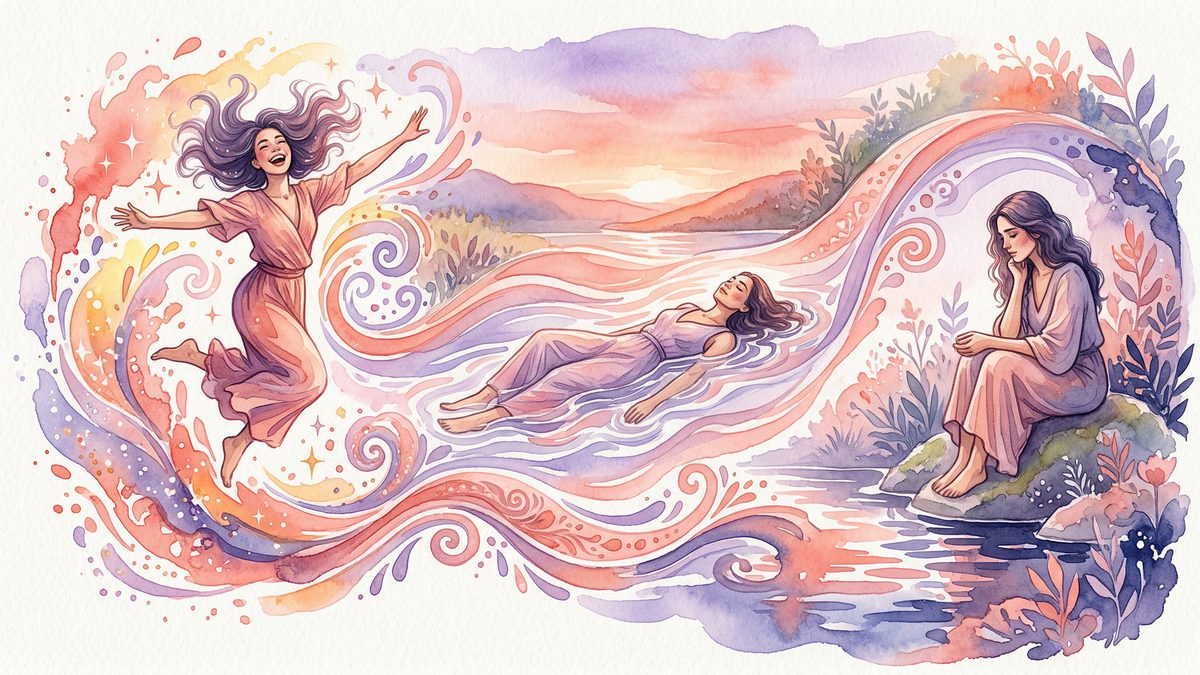
Have you ever noticed that some weeks you feel unstoppable — focused, social, and energetic — while other weeks you feel sluggish, irritable, or emotionally raw? And that it seems to happen on a predictable schedule? You're not imagining it. Your menstrual cycle has a profound and scientifically documented influence on your mood, energy, and cognitive function.
Understanding this connection doesn't just explain why you feel the way you do — it gives you the tools to plan, prepare, and thrive throughout your entire cycle.
The Hormone-Mood Connection
Your menstrual cycle is governed by fluctuating levels of estrogen, progesterone, and other hormones. These aren't just reproductive chemicals — they interact directly with the neurotransmitters in your brain that regulate mood and energy, including serotonin, dopamine, and GABA.
Estrogen, which rises during the first half of your cycle, is linked to increased serotonin production. Serotonin plays a central role in mood regulation, contributing to feelings of wellbeing, calm, and happiness. Progesterone, which dominates the second half of the cycle, has a more sedating effect — calming in early amounts, but potentially mood-dampening as it drops.
Research published in Frontiers in Neuroscience found that the menstrual cycle influences brain reactivity, with increased amygdala reactivity (the brain's emotional processing centre) during the luteal phase linked to high progesterone levels. This means your emotional responses are genuinely more intense in the week before your period — it's not a personality flaw, it's neuroscience.
Phase-by-Phase: What to Expect
Menstrual Phase (Days 1–5): The Reset
When your period begins, estrogen and progesterone are at their lowest. For many people, this means the tension of the late luteal phase finally lifts, bringing a sense of emotional relief — even through the physical discomfort of bleeding. Others experience low mood, fatigue, and difficulty concentrating, particularly if cramps are disruptive.
Energy outlook: Generally low, particularly in the first 1–2 days. Iron loss from bleeding can contribute to fatigue, especially in those with heavy periods.
Mood outlook: Variable. Some feel a release of pent-up emotion; others feel depleted. Self-compassion and reduced expectations are your best tools here.
Follicular Phase (Days 1–13): Rising Energy
As estrogen begins to climb during the follicular phase, you're likely to notice a corresponding lift in mood, energy, and motivation. This is typically the phase when people feel most like themselves — optimistic, social, and mentally sharp.
Estrogen's influence on serotonin means you'll often feel happier, more resilient, and better able to handle stress. Cognitive tasks that require memory, verbal fluency, and creative thinking may feel easier during this phase.
Energy outlook: Steadily increasing. By the end of the follicular phase, many people are at their physical and mental peak.
Mood outlook: Positive, outgoing, motivated. Social energy tends to be high. This is a great time for new projects, difficult conversations, and ambitious goals.
Ovulatory Phase (Days 13–16): Peak Performance
Ovulation marks the hormonal peak of your cycle. Estrogen is at its highest, testosterone spikes briefly, and LH surges. This combination is associated with the highest confidence, libido, and interpersonal warmth of the entire month.
Studies have found that communication skills and social confidence tend to be highest around ovulation. You may feel more charismatic and comfortable in social situations during this window.
Energy outlook: At its peak. Most people feel their most physically capable and mentally alert.
Mood outlook: Confident, expansive, social. This window is ideal for presentations, networking, first dates, and high-stakes work tasks.
Luteal Phase (Days 15–28): The Emotional Shift
After ovulation, progesterone rises sharply. In the early luteal phase, progesterone's calming, GABA-like effect can feel pleasant — many people report feeling more relaxed and introspective. Sleep quality may also be better early in this phase.
However, as you approach the end of the luteal phase, both progesterone and estrogen fall. This hormonal withdrawal can trigger PMS symptoms in the week before your period: irritability, anxiety, mood swings, low mood, difficulty concentrating, and emotional sensitivity.
Serotonin also drops as estrogen falls — a key reason why emotional regulation becomes harder in the late luteal phase.
Energy outlook: Declining. Fatigue and brain fog are common, especially in the final days before your period.
Mood outlook: Variable to challenging. Internal focus increases; social energy decreases. Many people become more sensitive to criticism, conflict, and overwhelm.
Why This Matters Beyond Emotions
Sleep
Your cycle affects sleep quality throughout the month. Many people find they sleep better in the follicular phase and struggle more in the luteal phase, when progesterone fluctuations can increase body temperature and disrupt sleep architecture. Tracking your sleep alongside your cycle phases can reveal these connections.
Cognitive Performance
Research shows subtle but real changes in tasks involving memory, spatial reasoning, and verbal fluency across the cycle. While these shifts aren't dramatic for most people, understanding them can help you plan cognitively demanding work during your high-estrogen phases.
Exercise Capacity
Energy availability for physical exercise also follows the hormonal rhythm. Performance in high-intensity activities tends to peak in the follicular and ovulatory phases; endurance and strength may feel diminished in the luteal phase and early menstruation.
Tracking Your Mood and Energy: The Key to Self-Understanding
The most powerful thing you can do with this knowledge is track it. Everyone's hormonal experience is unique. Some people barely notice mood changes across their cycle; others experience dramatic shifts. Conditions like PMDD (premenstrual dysphoric disorder) can amplify the late-luteal mood drop significantly.
Using Your Rhythm (available on iOS and Android) to log your mood, energy, and emotional state throughout the month allows you to identify your personal pattern — when your emotional highs and lows occur, how long they last, and what helps. Over time, this data transforms unpredictable emotional weather into a forecast you can plan around.
Rather than being caught off guard by a week of low mood or inexplicable irritability, you'll be able to anticipate it, prepare coping strategies, and extend yourself the self-compassion you deserve.
A Note on When Symptoms Are More Than "Normal" PMS
Mild to moderate mood shifts in the luteal phase are a normal part of the menstrual cycle. But if premenstrual mood symptoms are severe enough to disrupt your relationships, work, or daily functioning, it's worth speaking to a doctor about PMDD (premenstrual dysphoric disorder), which affects 2–5% of menstruating people and responds well to treatment.
Tracking your symptoms with Your Rhythm for at least two to three cycles and bringing that data to your appointment will give your doctor the clearest possible picture.
Попробуй Your Rhythm бесплатно
Отслеживай цикл, записывай настроение и получай персональные инсайты. Доступно на iOS и Android.
Похожие статьи
12 Perimenopause Symptoms You Shouldn’t Ignore (Plus Relief Tips for 2026)
Hot flashes aren’t the only sign. Here are 12 common perimenopause symptoms, why they happen, what you can do today, and when it’s time to talk to a clinician.
Читать статью12 Ovulation Symptoms: The Most Common Signs You’re Fertile in 2026
Wondering if you’re ovulating? Learn the 12 most common ovulation symptoms, what’s normal vs. a red flag, and how to confirm your fertile window with simple at-home steps.
Читать статью