Follicular Phase Workout Plan: How to Train for Energy, Strength, and Better Cycle Syncing
This content is provided for informational purposes only and does not constitute medical advice. It is not intended to diagnose, treat, cure, or prevent any condition. Always consult a qualified healthcare professional regarding any medical concerns or changes to your health.
Follicular Phase Workout Plan: How to Train for Energy, Strength, and Better Cycle Syncing
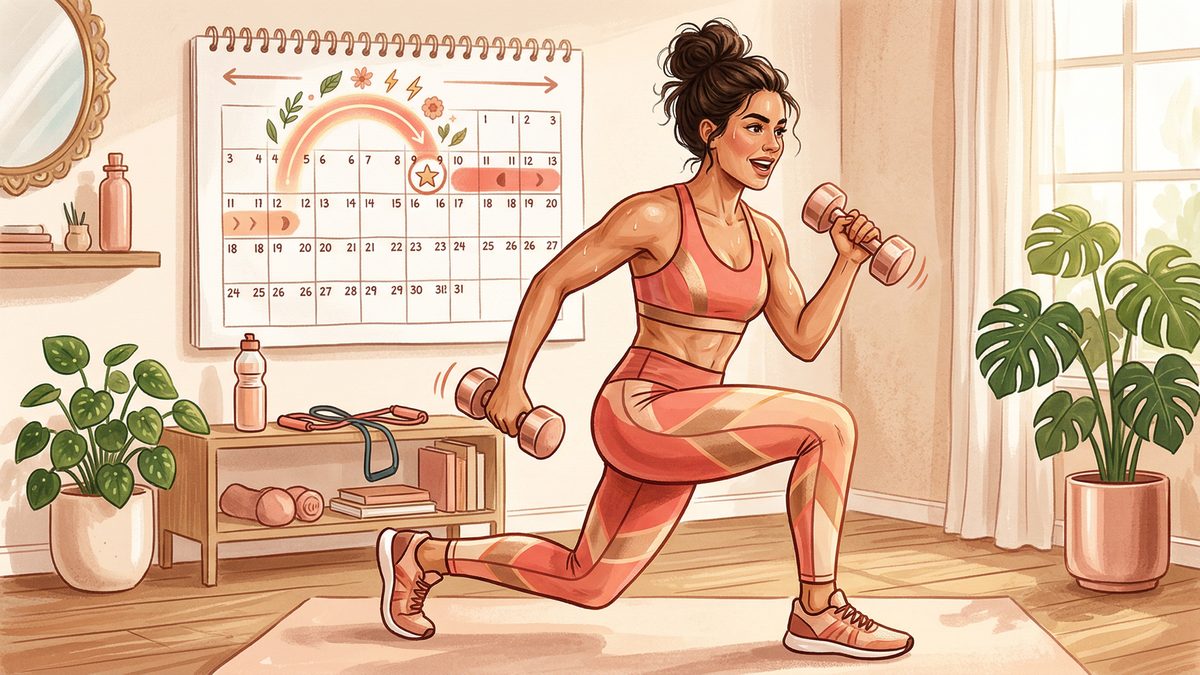
If you’ve ever noticed that workouts feel easier the week after your period starts, you’re not imagining it. The follicular phase is often when energy, motivation, and training tolerance start to rise—making it a great time to build strength, try new workouts, and lay the foundation for the rest of your cycle.
This guide gives you a practical follicular phase workout plan you can actually use (even if your cycle isn’t perfectly regular). You’ll learn what’s happening hormonally, how to structure workouts from early to late follicular phase, what to eat and prioritize for recovery, and how to track your own patterns in Your Rhythm so your plan gets more personalized over time.
Quick note: Everyone’s cycle is different. This article is educational, not medical advice. If you have severe symptoms, very irregular cycles, or a condition like PCOS or endometriosis, consider getting individualized care.
What is the follicular phase (and when does it start)?
The follicular phase begins on Day 1 of your period and lasts until ovulation. For many people, that’s roughly 10–14 days, but it can be shorter or longer—especially if you have irregular cycles.
To keep it practical for training, it helps to split the follicular phase into two parts:
- Early follicular (period + just after bleeding): hormones are relatively low; you may feel crampy, tired, or “warming up.”
- Late follicular (after bleeding → pre-ovulation): estrogen rises; many people feel stronger, more social, more resilient, and better able to push intensity.
If you’re new to cycle tracking, start with the basics in this beginner’s guide to tracking your cycle.
Why workouts can feel better in the follicular phase
In the follicular phase, estrogen gradually rises while progesterone stays low until after ovulation. Some research suggests strength and anaerobic performance may be higher during the follicular phase, particularly as estrogen peaks closer to ovulation (PubMed).
In real life, this often shows up as:
- Better motivation and tolerance for hard sessions
- Faster recovery (for some people)
- A greater appetite for novelty (trying a new class, learning a lift)
- Improved mood and confidence
If you track mood and energy, you may notice the pattern described in how your cycle affects your mood and energy levels.
The follicular phase workout plan (week-by-week)
Below is a flexible plan you can follow whether you lift weights, do cardio, or mostly do at-home workouts. Think in workout themes rather than rigid dates.
Plan overview (the “minimum effective dose”)
Aim for:
- 2–3 strength sessions/week
- 1–2 cardio sessions/week (mix steady-state + intervals)
- 1–2 mobility / low-intensity sessions/week
- At least 1 full rest day/week
If that feels like a lot, start with 2 strength sessions and 2 easy movement days. Consistency beats perfection.
Early follicular phase (Days 1–5-ish): restore + reintroduce intensity
When bleeding and cramps are present, it’s normal to feel less explosive. The goal is to keep moving while respecting recovery.
Best workout types
- Easy strength technique sessions (lighter weights, clean form)
- Zone 2 cardio (brisk walk, easy cycle, light jog)
- Mobility, yoga, Pilates
If you deal with cramps, combine this section with the strategies in period cramps: 10 science-backed ways to find relief.
Sample 3-day template (repeat as needed)
Day A: Full-body strength (light-to-moderate)
- Squat pattern (goblet squat) 3×8
- Hinge pattern (Romanian deadlift) 3×8
- Push (incline push-up or dumbbell press) 3×8
- Pull (row variation) 3×10
- Core (dead bug / plank) 2–3 sets
Day B: Low-intensity cardio + mobility
- 25–40 minutes easy cardio
- 10 minutes hips + hamstrings mobility
Day C: Technique + “feel-good” finisher
- 20–30 minutes light strength (machines or bodyweight)
- 6–10 minutes short intervals (optional)
If your period symptoms are intense, it’s fine to swap strength for gentle movement. Your best “plan” is one you’ll actually do.
Late follicular phase (Days 6–ovulation): build + push + progress
As energy rises, this is a great time to:
- Lift heavier
- Add intensity (intervals/HIIT)
- Progress skills (pull-ups, heavier squats, new running pace)
Some guides on cycle syncing suggest higher-intensity training fits well here (WebMD).
Sample 4-day template (gym or home)
Day 1: Lower-body strength (heavy-ish)
- Squat or leg press 4×5
- Romanian deadlift 3×6
- Split squat 3×8/side
- Calf raises 3×10
- Short core circuit
Day 2: Intervals (20–30 minutes total)
- Warm-up 8 minutes
- 8–10 rounds: 30s hard / 60–90s easy
- Cool-down 5 minutes
Day 3: Upper-body strength (heavy-ish)
- Bench press or push-up progression 4×5
- Row 4×6
- Overhead press 3×6
- Lat pulldown or assisted pull-up 3×8
- Accessories (biceps/triceps) 2–3 sets
Day 4: Athletic conditioning or full-body power
- Kettlebell swings 6×10
- Box step-ups 3×10/side
- Medicine ball slams 5×8
- Farmer carries 4×30–45s
If you’re prone to mid-cycle pelvic discomfort, read ovulation pain on one side: causes and relief and keep impact lower if needed.
How to adjust the plan if your cycle is irregular
Irregular cycles can make “Day 14 ovulation” planning frustrating. Instead, use signals:
- Energy and sleep quality
- Cervical mucus changes
- Resting heart rate trends
- Motivation and perceived exertion in workouts
Your Rhythm can help you track symptoms, mood, and cycle patterns so you’re adjusting based on your body—not a calendar. If irregular cycles are common for you, start with irregular periods: causes, when to worry, and what to do and period tracking for fertility: what you need to know.
Nutrition for the follicular phase (simple, practical)
You don’t need a complicated “cycle syncing diet” to benefit. Focus on basics that support training and recovery:
1) Prioritize protein at each meal
A simple target is 20–35g protein per meal (adjust for body size and goals). This supports muscle repair as you increase intensity.
2) Don’t under-fuel hard training
When you push intensity (especially intervals), carbs help performance. Use this phase to rebuild steady fueling habits—especially if you tend to skip meals.
For more food ideas by phase, see best foods to eat during each phase of your cycle.
3) Support iron (especially if bleeding is heavy)
If you have a heavy period, iron needs matter. Include iron-rich foods (lentils, beans, beef, spinach) and pair plant sources with vitamin C. If you suspect low iron, talk to a clinician.
Recovery: the underrated part of cycle syncing
Pushing harder in late follicular is useful only if recovery supports it. Aim for:
- 7–9 hours sleep (or improve consistency if that’s unrealistic)
- At least 1 true rest day
- Mobility work 2–3×/week
If sleep is a recurring issue later in the cycle, compare your patterns with luteal phase insomnia: why it happens and what helps.
Common questions about follicular phase training
Can I do HIIT during my period?
Sometimes, yes—if symptoms are mild and you feel up for it. If cramps, heavy bleeding, dizziness, or fatigue are present, switch to a brisk walk, cycling, or a light strength session. Your body’s feedback is more useful than forcing a plan.
Should I lift heavier in the follicular phase?
Many people feel strongest in the late follicular window. If that’s true for you, consider making this your “progress weeks” for heavier lifts or new personal bests. Research on phase-based resistance training suggests potential advantages to emphasizing follicular-phase training for strength outcomes (PubMed).
What if I get brown discharge or spotting mid-cycle?
Light spotting can happen for different reasons, including around ovulation. If you notice it, log it and look for patterns. If it’s frequent, heavy, painful, or new, it’s worth checking in with a clinician. You can also read brown discharge before period: common causes.
How do I know I’m close to ovulation?
Some people notice clearer, stretchy cervical mucus, a slight change in basal body temperature (if tracking), or mild one-sided pelvic pain. Your Rhythm can help you log symptoms and identify your own ovulation window over time. If you’re trying to conceive, pair tracking with period tracking for fertility and track ovulation with irregular periods.
How to use Your Rhythm to make this plan personal
A template is helpful, but your best training plan is based on your recurring signals. In Your Rhythm, try tracking these daily for one full cycle:
- Energy (1–5)
- Mood (1–5)
- Sleep quality
- Exercise type + intensity
- Symptoms (cramps, headaches, bloating)
After a month, you can look back and answer:
- When do hard workouts feel easiest?
- When do you need more recovery?
- Do you tend to get ovulation pain, spotting, or mood shifts?
That’s cycle syncing that actually works—less “rules,” more pattern recognition. For a broader overview, revisit understanding the 4 phases of your menstrual cycle and the ultimate guide to understanding the menstrual cycle.
Final takeaways
- Early follicular: prioritize movement, technique, and gentle progression.
- Late follicular: push strength and intensity if energy is higher.
- Track your symptoms and recovery so your plan adapts to your real cycle.
Ready to try cycle-based training without overthinking it?
If you want an easy way to spot patterns between workouts, mood, and cycle symptoms, Your Rhythm can help you track everything in one place. Start logging for one cycle, then use what you learn to build a follicular phase workout plan that feels sustainable—and actually improves over time.
Essayez Your Rhythm gratuitement
Suivez votre cycle, notez votre humeur et obtenez des analyses personnalisées. Disponible sur iOS et Android.
Articles connexes
12 Perimenopause Symptoms You Shouldn’t Ignore (Plus Relief Tips for 2026)
Hot flashes aren’t the only sign. Here are 12 common perimenopause symptoms, why they happen, what you can do today, and when it’s time to talk to a clinician.
Lire l'article12 Ovulation Symptoms: The Most Common Signs You’re Fertile in 2026
Wondering if you’re ovulating? Learn the 12 most common ovulation symptoms, what’s normal vs. a red flag, and how to confirm your fertile window with simple at-home steps.
Lire l'article